
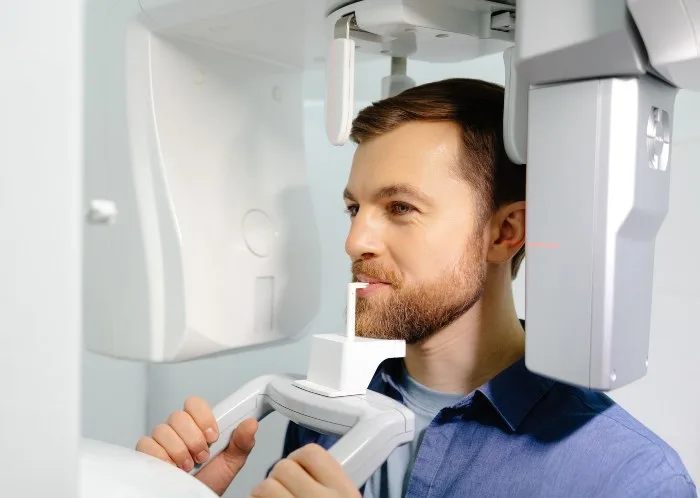
Cone Beam Computed Tomography (CBCT) has changed the way dentists and even neurologists are able to diagnose and treat their patients. So what is a CBCT dental for dentistry, and just what can it do? How does this dental scanning tool become a valuable utility not only in traditional care but also in holistic settings?
At Neuroplasticity St Pete, we utilize CBCT scans for not just dental imaging but also to assess the upper cervical region, spine, and jaw morphology, as well as neurocranial symmetry. At our clinic here in St Petersburg, Florida, we combine CBCT dental scans into our protocols of functional neurology, allowing patients as well as doctors to gain additional valuable information and knowledge about what is actually going on inside the structures.
Key Takeaways
- CBCT dental scan is a high-resolution, 3D examination of the teeth, jawbone, maxillary sinuses, and upper cervical spine.
- They assist by accurately planning treatments such as implants, orthodontics and TMJ treatment.
- CBCT does not cause as much radiation to the patient compared to a regular CT, so it is safer as a diagnostic instrument.
- At Neuroplasticity St Pete, we use CBCT to examine neurostructural alignment, not just oral health.
- The scan takes under 15 minutes, is non-invasive, and helps patients avoid unnecessary treatments.
- Understanding upper cervical alignment through CBCT can provide insight into migraines, dizziness, and more.
Book An Appointment Now
What Is a CBCT Dental Scan?
A CBCT dental scan (Cone Beam Computed Tomography) is an advanced imaging tool that creates detailed 3D images of the mouth, skull, and cervical spine. It captures these images in a single, quick scan—giving providers far more diagnostic clarity than traditional two-dimensional X-rays.
At Neuro St Pete, our doctors use CBCT imaging not just for dental evaluations but to assess how cranial and cervical structures influence whole-body symptoms like chronic pain, migraines, and posture issues.
Why Dentists Rely on CBCT Imaging
You might be wondering—why would a dentist (or chiropractor) need a 3D scan that looks beyond just the teeth?
The answer lies in precision. A CBCT dental scan reveals details that basic X-rays simply can’t. Whether it’s the angle of a wisdom tooth or subtle degeneration in the jaw joint, CBCT picks up the small things before they become big problems.
More Accurate Diagnoses
CBCT scans reveal an overview of root canals, nerve positions, fractures, lesions, sinus cavities, and bone density. This ensures that infections, nerve damage, and abnormal growths are diagnosed far more accurately and quickly.
Safer, More Informed Surgery Planning
When we place dental implants or perform jaw surgery, we must be careful not to touch any nerves or sinuses. CBCT results in a more accurate “map” of these structures, leading to better planning and surgical results.
Better Evaluation of TMJ and Jaw Alignment
Patients struggling with TMJ dysfunction, bite issues, or facial pain benefit from CBCT imaging because it allows us to analyze how the jaw joints are moving. It even shows disc displacements or degeneration within the joint.
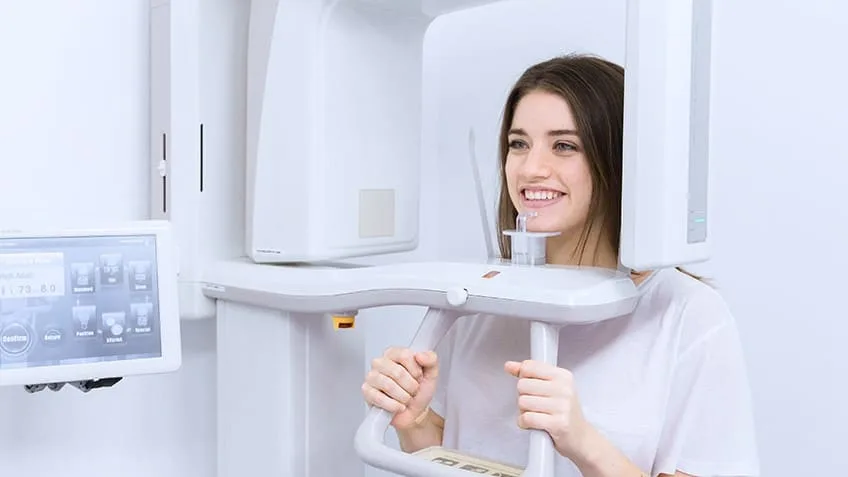
What to Expect During a CBCT Scan at Neuroplasticity St Pete
Wondering what your appointment might look like? Here’s a simple breakdown:
Initial Consultation
We sit down with you to discuss your symptoms, health history, and goals. If a CBCT dental scan is indicated, we’ll explain why and how it could help.
The Scan
You’ll either stand or sit in our advanced imaging system while it rotates around your head. There’s no need to change clothes, and no discomfort is involved.
Expert Analysis
We review the results to assess not just teeth and jaw structure, but also spinal alignment, sinus health, and neurological patterns.
Customized Care Plan
Based on what we find, we’ll create a personalized care strategy that could include chiropractic adjustments, neurology resets, light therapy, and more—all under one roof.
Conclusion
At Neuroplasticity St Pete, we utilize CBCT imaging as a primary instrument to not only optimize dental care but also to identify and treat underlying neurological and structural issues. From jaw position and dental implants to migraines and nerve impairment, a CBCT dental scan shows us the whole picture—so you can receive full care.
Contact us today at (727) 202-6006 to schedule your CBCT assessment or inquire about how it could enhance your individualized care plan.
Frequently Asked Questions
What does a CBCT dental scan show that traditional X-rays can’t?
CBCT utilizes X-rays to produce three-dimensional images of teeth, bone, nerves, and soft tissue structures with greater precision than traditional X-rays. This enables providers to identify infection, misalignments, cysts, or impacted teeth that could be overlooked in the 2D imagery.
Is a CBCT scan required for all dental procedures?
Not always. But it’s frequently recommended for dental implant placement, TMJ assessment, and orthodontic treatment planning, as well as for more complex pain cases where traditional imaging isn’t sufficient.
How much does a CBCT scan cost at Neuroplasticity St Pete?
We offer CBCT scans for $250. The scanning process takes approximately 15 minutes and offers critical 3D information to develop precise treatment plans.
Is the radiation from a CBCT scan dangerous?
No, low-dose radiation is used in CBCT, and the toxicity of it is far lower than that produced by conventional CT. We look at the benefits and make sure it’s used responsibly when we absolutely need it.
Can a CBCT scan help with headaches or neck pain?
Absolutely. Most headaches come from the neck or jaw. At Neuro St Pete, we utilize CBCT to identify these problems so that we may provide focused care that treats the underlying cause.
Our Services